What Are the 2026 Top Power Capacitor Types for Buyers?

What Are the 2026 Top Power Capacitor Types for Buyers? This question demands more than a product list. Modern electrical systems face harmonics, voltage variation, heat, and stricter efficiency targets. A capacitor that performs well in a factory may struggle in a solar inverter. Application details matter.

Power-electronics authority Dr. T. J. E. Miller has emphasized, “The capacitor is often the weakest link in a power converter.” That warning remains practical in 2026. Buyers should examine metallized polypropylene film capacitors, oil-filled power capacitors, dry-type units, AC filter capacitors, and DC-link designs. Each type serves a different electrical duty. Each has different cooling, insulation, ripple-current, and service requirements.

The strongest choice is not always the largest-rated unit. It may be a self-healing film capacitor with low losses. It may also be a detuned capacitor bank that reduces resonance risks. Site measurements should guide the decision. Check voltage, frequency, harmonic content, ambient temperature, switching behavior, and expected operating hours. Review tested service life, discharge resistors, protection devices, and certification records. Details become expensive later.

This overview compares the leading Power Capacitor types expected to attract buyers in 2026. It considers performance, maintenance, safety, lifecycle value, and installation conditions. No ranking is perfect. I may favor film technology for demanding converter systems, but that preference needs testing against budget and field realities. A cheaper capacitor can become costly when heat, harmonics, or poor ventilation shorten its life.
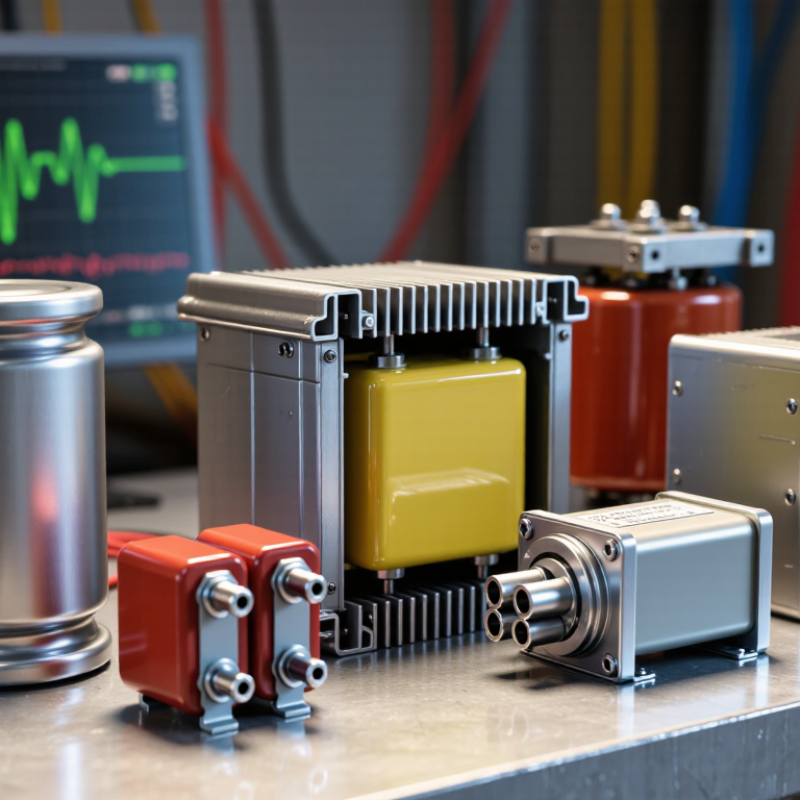
What Are the 2026 Top Power Capacitor Types for Buyers?

Power Capacitors: Definition, Functions, and Key Applications

Power capacitors store electrical energy and release it when circuits need support. Their main job is reactive-power compensation. This improves power factor, reduces current, and helps limit voltage loss. The IEA Electricity 2024 report expects global electricity demand to grow by about 3.2% annually through 2026. That growth increases pressure on industrial feeders, renewable systems, and distribution networks.

For 2026 buyers, shunt capacitors remain practical for factory power-factor correction. Automatic capacitor banks adjust stages as loads change. Harmonic-filter capacitors suit plants with variable-speed drives, inverters, or large rectifiers. Series capacitors can improve transmission stability and reduce line-reactance effects. DC-link capacitors support converters and energy-storage equipment, where ripple current and temperature strongly affect service life. IEC 60871 and IEEE Std 18 provide useful requirements for AC capacitor performance, testing, and protection. A capacitor is not a magic cure. Poorly measured harmonics can shorten its life quickly.

Tips: Check voltage, kvar rating, inrush current, ambient temperature, and harmonic distortion before purchasing. Ask for tested loss data and discharge-device performance. The U.S. Department of Energy’s Better Buildings guidance links power-factor correction with lower electrical losses, but savings depend on the actual load profile. Buyers should record measurements at different operating hours, not rely on one meter reading. I would also leave capacity headroom, although excessive correction may create resonance or an unstable leading power factor. That detail is often missed.

What Are the 2026 Top Power Capacitor Types for Buyers?

Typical DC voltage classes for widely used power capacitor technologies. Values are representative component-level ranges; actual ratings depend on construction, temperature, ripple current, lifetime, and safety requirements.

Buying insight: Aluminum electrolytic capacitors are commonly selected for bulk energy storage and DC-link filtering. Polypropylene film capacitors are preferred for high ripple current, long life, and power-factor correction. Ceramic capacitors support high-frequency decoupling, while supercapacitors provide very high energy storage at low voltage per cell.

How to Classify the Main Power Capacitor Types

What Are the 2026 Top Power Capacitor Types for Buyers?

How to Classify the Main Power Capacitor Types

Buyers can classify power capacitors by purpose, construction, and electrical location. Shunt capacitors support voltage and improve power factor in distribution systems. They usually connect in parallel with inductive loads, such as pumps, transformers, and compressors. Series capacitors reduce line reactance and improve power transfer across long transmission routes. Their protection requirements are more demanding.

Filter capacitors remove unwanted harmonic currents from rectifiers, converters, and industrial drives. A detuned filter adds reactors to reduce resonance risk. Coupling capacitors transfer communication signals through high-voltage networks while blocking the main-frequency voltage. Motor capacitors form another practical group. Starting capacitors provide short bursts of torque, while running capacitors remain active during operation.

Construction also matters. Film capacitors offer stable performance, low losses, and strong pulse handling. Electrolytic capacitors provide high capacitance in smaller packages, but they need careful attention to ripple current, heat, and service life. Ceramic types suit compact, high-frequency circuits, although their capacitance can change under voltage or temperature.

Look beyond the label.

A reliable purchase review checks rated voltage, capacitance tolerance, frequency, cooling conditions, discharge time, and expected switching cycles. For outdoor cabinets, moisture sealing and corrosion resistance deserve close inspection. Installation records should match the capacitor’s actual duty, not only its catalog rating. A clean classification can still mislead. Harmonics, ambient heat, and frequent switching may shorten a seemingly suitable component’s life. Testing the complete system remains wiser than choosing from a type name alone.

What Are the 2026 Top Power Capacitor Types for Buyers? – How to Classify the Main Power Capacitor Types
Power Capacitor Type Primary Dielectric or Technology Polarity Typical Capacitance Range Typical Voltage Range Main Applications Key Advantages Main Limitations and Buyer Checks
AC Power-Factor-Correction Capacitors Metallized polypropylene film, commonly self-healing Non-polarized; designed for AC service Approximately 5–500 μF per unit, commonly specified by kVAR Approximately 230–1,000 VAC, 50/60 Hz Low-voltage switchboards Motor systems Automatic capacitor banks Power-factor correction Low dielectric loss, long service life, strong AC performance, and self-healing behavior after minor dielectric punctures. Check rated voltage, kvar output, harmonic environment, inrush current, discharge resistor, enclosure protection, and expected ambient temperature.
AC Filter and Harmonic-Filter Capacitors Heavy-duty polypropylene film, often used with reactors Non-polarized; AC-rated Approximately 1–500 μF per phase, depending on filter design Approximately 400–1,200 VAC; higher system ratings may use series arrangements Detuned capacitor banks Passive harmonic filters Industrial drives Grid-connected converters Handles repetitive current stress and offers stable capacitance with relatively low losses. Confirm RMS current, peak current, harmonic spectrum, resonance frequency, thermal design, and coordination with the series reactor.
DC-Link Film Capacitors Metallized polypropylene film Non-polarized; used on DC buses Approximately 10 μF–10 mF per capacitor, depending on power level Approximately 450–2,000 VDC; higher systems may use series-connected units Solar inverters Wind converters Motor drives Electric-vehicle power electronics Industrial converters Very low ESR and ESL, high ripple-current capability, good pulse performance, and long life under frequent charge-discharge cycles. Check continuous DC voltage, ripple current at operating temperature, peak current, mounting inductance, creepage, clearance, and expected lifetime.
DC-Link Aluminum Electrolytic Capacitors Aluminum oxide dielectric with liquid or polymer electrolyte Polarized Approximately 10 μF–1 F per capacitor Approximately 16–800 VDC AC-DC converters Switch-mode power supplies Industrial drives Energy storage on DC buses High capacitance per unit volume, comparatively low purchase cost, and broad availability in standard case sizes. Limited lifetime from electrolyte aging, higher ESR than film types, polarity sensitivity, leakage current, and strong temperature dependence.
Aluminum Electrolytic Snap-In and Screw-Terminal Capacitors Aluminum oxide dielectric with liquid electrolyte Polarized Approximately 47 μF–10,000 μF per capacitor Approximately 25–600 VDC Power supplies UPS systems Welding equipment Industrial control cabinets High bulk-energy storage, simple parallel connection, and efficient filtering of low-frequency rectifier ripple. Confirm ripple-current rating, lifetime at actual core temperature, venting clearance, mounting method, polarity, and series-balancing requirements.
High-Voltage Ceramic Capacitors Class 1 or Class 2 ceramic dielectric Non-polarized Typically 100 pF–1 μF; high-voltage parts are often at the lower end Approximately 1–50 kVDC, depending on construction High-voltage power supplies RF networks Snubbers X-ray equipment Pulse circuits Compact size, low inductance, fast response, high voltage capability, and strong high-frequency performance. Capacitance can vary with DC bias and temperature, especially for Class 2 ceramics; verify insulation resistance, mechanical stress tolerance, and partial-discharge performance.
Film Snubber and Pulse Capacitors Polypropylene film, sometimes with specialized pulse-film construction Non-polarized Approximately 0.01–100 μF Approximately 100–5,000 VDC IGBT and MOSFET switching Voltage snubbers Pulse discharge Resonant converters High peak-current capability, low ESL, low loss, and reliable repetitive pulse operation. Evaluate dv/dt rating, peak current, pulse repetition rate, energy per pulse, terminal inductance, and thermal dissipation.
AC Motor-Run Capacitors Metallized polypropylene film in a sealed or resin-filled enclosure Non-polarized; continuous AC duty Approximately 1–100 μF Approximately 250–500 VAC, 50/60 Hz Single-phase motors Fans Pumps Compressors Suitable for continuous operation, stable capacitance, low loss, and compact mechanical packaging. Match capacitance and AC voltage precisely; check temperature class, mounting position, enclosure rating, discharge behavior, and motor duty cycle.
AC Motor-Start Capacitors Electrolytic construction optimized for intermittent duty Polarized internally; used only in the specified AC starting circuit Approximately 50–1,000 μF Approximately 125–330 VAC Single-phase motor starting Compressors Pumps Machine tools High capacitance in a compact package and strong short-duration starting torque. Not suitable for continuous duty; verify operating time, restart interval, relay compatibility, temperature, and correct connection polarity.
Supercapacitor and Ultracapacitor Modules Electrochemical double-layer capacitor or hybrid electrode system Cell polarity must be respected; modules may include balancing circuits Approximately 1 F–3,000 F per cell or module Approximately 2.7 V per EDLC cell; modules commonly range from 5–100 V Regenerative braking Ride-through systems Peak-power assistance Backup energy Extremely high power density, very high cycle life, rapid charge and discharge, and useful performance at frequent cycling. Low energy density compared with batteries, voltage falls during discharge, leakage current is relatively high, and series strings require voltage balancing.
Metallized Paper Power Capacitors Metallized paper, often combined with oil or resin impregnation Non-polarized; AC or DC designs are application-specific Approximately 0.1–100 μF, depending on voltage and construction Approximately 1–20 kV Legacy high-voltage equipment Impulse circuits Specialized AC systems Good dielectric strength and useful self-healing behavior in suitable metallized constructions. Generally larger than modern film alternatives; check moisture resistance, impregnation condition, insulation aging, fire behavior, and applicable safety regulations.
Oil- or Resin-Filled Power Capacitor Assemblies Film or paper-film element inside a sealed liquid- or resin-filled housing Non-polarized; AC or DC rating depends on the assembly Approximately 1–1,000 μF per assembly Approximately 1–100 kV, depending on the system design Utility substations High-voltage test equipment Power-quality systems Pulse-power installations High insulation strength, effective heat transfer, and suitability for high-voltage or high-energy applications. Review enclosure integrity, pressure-relief design, fluid or resin safety, leakage protection, service access, lifting requirements, and end-of-life disposal rules.
Typical ranges are provided for buyer classification only. Actual ratings depend on construction, standards, temperature, frequency, ripple current, harmonic content, duty cycle, and the manufacturer’s tested specifications.

Top Power Capacitor Technologies Buyers Should Consider in 2026

In 2026, buyers should evaluate power capacitor technologies by application, not marketing language. Aluminum electrolytic capacitors remain practical for bulk energy storage in DC-link systems. They offer high capacitance at a manageable cost. However, heat, ripple current, and service life require close inspection. Ripple current matters.

Film capacitors deserve attention in inverters, renewable-energy converters, and industrial motor drives. Their low equivalent series resistance supports efficient switching and reduced thermal stress. Metallized polypropylene designs can provide strong pulse handling and self-healing behavior. Buyers should verify voltage derating, humidity resistance, mechanical vibration limits, and expected operating hours. A smaller package is not always better.

Ceramic capacitors suit high-frequency filtering because they have low inductance and fast electrical response. Their capacitance can change under DC bias, especially in high-voltage applications. Hybrid capacitor assemblies may balance energy density, response speed, and lifetime, but they add design complexity. Power-factor correction projects may need different capacitor ratings than high-frequency switching circuits. Engineers should review ripple profiles, ambient temperature, fault conditions, and maintenance access before selecting a type.

From practical procurement reviews, datasheets rarely tell the entire story. Test certificates, batch consistency, thermal measurements, and supplier traceability deserve equal attention. Buyers should request endurance data under conditions close to actual operation. I would not choose the newest technology automatically. The best specification can still fail when airflow, wiring inductance, or installation space is ignored. These details often decide whether a capacitor performs reliably after years of service.

How to Compare Power Capacitors by Performance and Cost

What Are the 2026 Top Power Capacitor Types for Buyers?

When comparing power capacitors, start with the application, not the advertised price. Film capacitors often suit DC-link and inverter systems because they offer low losses, strong ripple-current handling, and long service life. Electrolytic capacitors usually provide higher capacitance in a smaller package. However, heat can shorten their operating life. Ceramic capacitors work well in high-frequency filtering, but their capacitance may change under voltage and temperature.

Compare performance through measurable values. Check rated voltage, ripple current, ESR, dissipation factor, temperature range, and expected lifetime. For power-factor correction, confirm the capacitor’s kvar rating and discharge requirements. For switching equipment, inspect current pulses and cooling conditions. A cheaper capacitor may need earlier replacement, creating higher ownership costs. Installation space, protection components, labor, and downtime also affect the real budget. Datasheets are useful, but they may not show every behavior in your cabinet.

Tips: Request test data at your actual temperature and switching frequency. Compare cost per service year, not cost per unit. Leave voltage margin. I would not trust a comparison based on capacitance alone. My first review of a capacitor table once ignored ripple current, which made the price comparison misleading. Field conditions can expose that mistake quickly. Also verify terminal design, sealing, mounting strength, and safe discharge time before approval. Small details matter.

Selection, Safety, and Maintenance Factors for Buyers

For 2026 buyers, power factor correction capacitors remain practical for industrial distribution systems. Shunt capacitors suit steady inductive loads, while detuned banks help where harmonics are present. Film capacitors support high-frequency converters and renewable-energy inverters. Electrolytic capacitors offer high capacitance in compact DC links, but their service life depends strongly on temperature. According to the International Energy Agency’s Electricity 2024 report, global electricity demand is expected to grow through 2026, increasing pressure on efficient power equipment.

Selection should begin with voltage, frequency, ripple current, fault level, and ambient temperature. Do not size only from the motor nameplate. IEEE 18 and IEC 60831 provide useful guidance for shunt capacitor performance and testing. For systems with variable-speed drives, buyers should request harmonic studies before installation. A detuned reactor may reduce resonance risk, although it adds losses, heat, and cost. Perfect choices rarely exist.

Safety details deserve equal attention. Specify discharge resistors, overpressure protection, fuses, isolation, and touch-safe enclosures. IEC 61071 is relevant for capacitors used in power electronics. Field experience shows that loose terminals, blocked ventilation, and repeated switching often cause avoidable failures. Check bulging cases, unusual noise, temperature rise, and capacitance drift during planned maintenance. Record measurements, not impressions. The U.S. Department of Energy continues to identify motor-system efficiency as a major industrial energy opportunity, yet maintenance quality can undermine those gains. I would also leave operating margin; aggressive sizing may look efficient today, but changing loads can create tomorrow’s problem.

Go to Top