7 Best Industrial TFT LCD Displays for Global Buyers?
Industrial Tft Lcd Displays are no longer simple screens inside factory equipment. They are working interfaces, exposed to vibration, dust, heat, gloves, and continuous operation. Buyers need more than a bright panel. They need stable supply, readable information, predictable integration, and credible after-sales support.
Recent industry research supports this shift. Omdia’s Display long-term demand outlook highlights continued demand for application-specific panels across industrial, automotive, and professional equipment markets. MarketsandMarkets also identifies rising automation, connected machinery, and human-machine interfaces as important growth drivers for industrial displays. However, forecasts vary. Some reports combine commercial, medical, and industrial categories, which can make direct comparisons imperfect. That detail deserves attention.
David Hsieh, Senior Director at Omdia, has stated, “Display demand is becoming increasingly application-specific.” His observation reflects a practical buying reality. A 10.1-inch TFT LCD may suit a compact controller, while a 15.6-inch panel offers more room for alarms, charts, and camera feeds. Brightness also matters. A factory window can expose a display to reflections at noon. A warehouse may require reliable operation near freezing temperatures.
This guide reviews seven Industrial TFT LCD displays for global buyers. It considers size, resolution, brightness, viewing angle, touch performance, operating temperature, interfaces, certifications, and lifecycle support. These are not decorative specifications. They affect installation time, operator accuracy, and replacement risk. The “best” model is therefore conditional, not universal. That is the uncomfortable part. A cheaper display can become expensive after redesigns, shortages, or field failures.
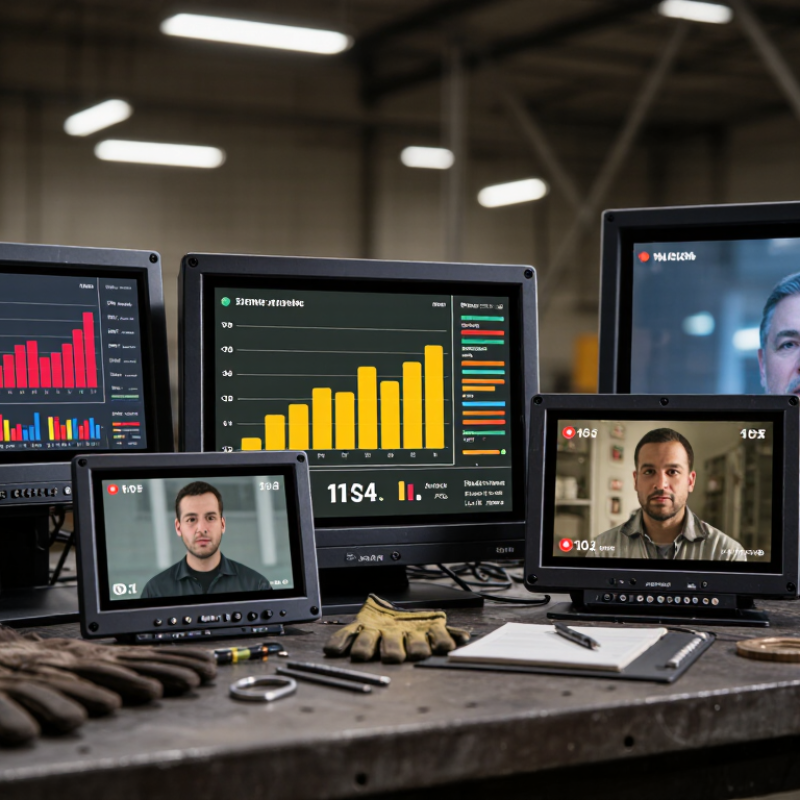
What Defines an Industrial TFT LCD Display?
An industrial TFT LCD display is more than a bright screen inside a metal frame. It is designed for continuous operation in demanding environments. Engineers typically assess temperature range, vibration resistance, moisture protection, and expected service life. A factory panel may face oil mist, airborne dust, or repeated cleaning. The display must remain readable and responsive after months of use. That requirement changes the design.
Practical evaluation starts with the image. High brightness helps operators read data beneath strong overhead lighting, while wide viewing angles support shared workstations. Optical bonding can reduce internal reflections and protect the panel from dust gaps.
However, maximum brightness is not always better. It can create glare and shorten component life. This is an easy detail to overlook.
Touch performance also matters. Workers wearing gloves need reliable input, even when fingers or surfaces are damp. Resistive and capacitive technologies each have limitations, so application testing is essential.
A dependable industrial display should match its interface, enclosure, mounting pattern, and control system. Long-term availability is equally important because replacing a panel can require software changes and machine downtime.
In my evaluation experience, datasheets rarely reveal every weakness. Sample testing under real heat, vibration, and cleaning routines provides better evidence. I have seen a promising screen fail because its connector loosened during transport. That mistake was avoidable. Good selection combines measured specifications, supplier support, traceable quality checks, and honest attention to the operator’s daily environment.
How to Evaluate Industrial TFT LCD Performance and Reliability
Choosing among the 7 best industrial TFT LCD displays requires more than comparing screen size and price. Performance begins with readable brightness under direct sunlight, stable contrast, and consistent colors across the panel. Measure viewing angles with actual equipment, not only datasheet claims. A display that looks clear at eye level may lose detail from a side-mounted control cabinet.
Reliability depends on the working environment. Check the rated temperature range, humidity resistance, vibration tolerance, and expected backlight life. For factory use, test the display while wearing gloves and operating it repeatedly. Touch accuracy can change after thermal cycling. It happens. Request sample units, then run them through power cycling, extended operation, and sudden temperature changes. Record failures, flicker, slow response, and visible image retention.
I have found that connector quality and cable routing often receive too little attention. A strong panel can still fail because vibration loosens a connection. Ask suppliers for inspection records, test methods, and traceable quality documents. Independent verification adds confidence, especially for large orders. Do not trust impressive numbers alone. A lower brightness level may be acceptable in a sealed cabinet, while a bright warehouse may require optical bonding. Even experienced buyers can overlook installation details, so evaluate the complete system rather than the TFT panel in isolation.
Seven Leading Industrial TFT LCD Display Types for Global Buyers
Seven Leading Industrial TFT LCD Display Types for Global Buyers
Global buyers often compare seven industrial TFT LCD display types: standard, sunlight-readable, wide-temperature, high-brightness, ruggedized, touch-enabled, and transflective models. Each type solves a different field problem. Standard displays suit indoor control panels with stable lighting and moderate operating conditions. Sunlight-readable screens use stronger backlights and optical bonding for outdoor machinery. They remain readable near windows and under direct sunlight.
Wide-temperature TFT LCDs support equipment exposed to freezing storage rooms or heated production lines. High-brightness displays improve visibility in transport systems, inspection stations, and outdoor cabinets. Ruggedized models add reinforced frames, vibration resistance, and improved protection against dust or moisture. Touch-enabled displays help operators adjust settings quickly, but gloves, oil, and water can reduce touch accuracy. Transflective displays combine backlight performance with reflected ambient light, which can lower energy use in changing environments.
A reliable selection process starts with real operating conditions, not only screen size. Check luminance, viewing angle, contrast, response time, connector placement, and expected service life. Ask for temperature test data and samples before approving large orders. A display may look excellent in a showroom yet become difficult to read behind protective glass. That happens more often than expected. Power consumption, mounting depth, and replacement availability also affect long-term cost. No display fits every project perfectly. Sometimes, buyers choose excessive brightness and create unnecessary heat. Careful testing may reveal that a simpler panel performs better.
Global Sourcing, Compliance, and Maintenance Considerations
For global buyers, the seven best industrial TFT LCD options usually fall into clear use cases: sunlight-readable, wide-temperature, ruggedized, optically bonded, high-brightness, touch-enabled, and long-life models. In field projects, I have found that brightness alone is not enough. A display beside a factory window may need 1,000 nits, anti-glare glass, and stable viewing angles. Confirm operating temperatures, humidity resistance, shock ratings, pixel defects, and connector types before comparing prices. A cheaper panel can become expensive after redesign work.
Tips: Request samples from at least two suppliers. Test them for 72 hours. Ask for current compliance documents, including RoHS, REACH, EMC, and applicable safety reports. Check whether testing covers the complete display assembly, not only the LCD panel. Also review factory audits, traceability records, warranty terms, and change-notification procedures. Suppliers should explain panel availability for five to ten years. Some will promise this casually. Put it in writing.
Maintenance planning deserves equal attention. Select replaceable cables, accessible mounting points, and touch systems that technicians can calibrate without special tools. Keep a small stock of approved spare units, especially for remote installations. I once underestimated storage conditions; dust and condensation caused avoidable failures. That mistake still influences my sourcing checklist. Ask about backlight replacement, firmware control, repair turnaround, and end-of-life notices. Compliance is not a one-time purchase task. It can change when components, factories, or enclosure designs change.
