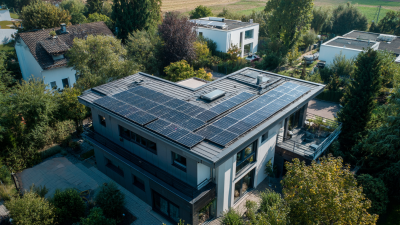
For global buyers, choosing among China’s smart solar manufacturers is more than comparing panel prices. A reliable partner must connect modules, inverters, batteries, software, and after-sales support into one workable system. This guide explores how leading suppliers approach that challenge, from factory controls to project delivery. The phrase smart solar sounds impressive, but its value appears in daily operation. A technician should see output data clearly, receive fault alerts, and diagnose weak performance before revenue suffers.
We will examine manufacturing experience, product testing, certifications, warranty terms, and communication during demanding installations. Evidence matters: production photographs, test reports, sample specifications, reference projects, and traceable company information. A rooftop in Queensland, a farm in Kenya, and a commercial site in Germany may need different designs. Local grid rules, weather, voltage, logistics, and installer skills can change the right supplier choice. A factory that excels at containers may not serve a small distributor well.
Buyers should compare technical support as carefully as they compare efficiency ratings. Can the supplier explain battery thermal protection in plain language? Can it replace a failed inverter without creating weeks of uncertainty? These questions reveal practical reliability. Still, no shortlist is perfect, and publicly available information can be incomplete or outdated. That limitation deserves honest attention rather than confident marketing language. The following overview offers a careful starting point for due diligence, not a substitute for independent engineering review. With verified evidence and realistic expectations, global buyers can pursue safer, more efficient, and more maintainable solar investments.
China Top Smart Solar Manufacturers for Global Buyers?
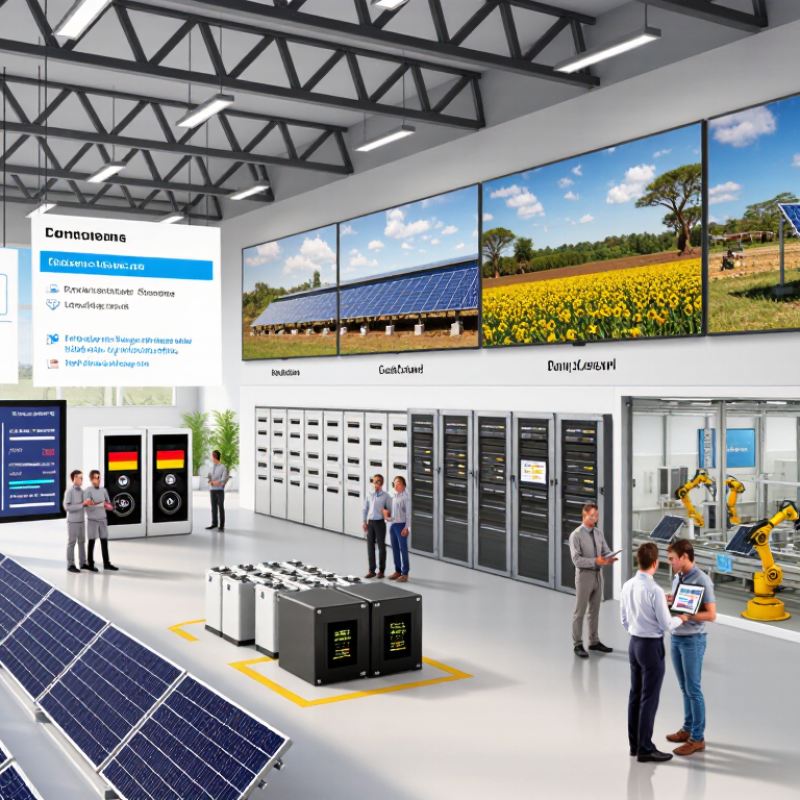
Smart solar is more than a panel producing electricity. It combines photovoltaic modules, digital controls, artificial intelligence, and energy storage. PV creates power during daylight. Batteries shift that power into evening hours. AI studies weather, load patterns, and battery conditions, then improves dispatch decisions. The system still needs human oversight. Algorithms can misread unusual weather or incomplete site data.
The 2024 IEA PVPS assessment reported about 447 GW of new PV capacity installed worldwide in 2023, lifting global capacity beyond 1.6 TW. This scale changes supplier evaluation. Global buyers should examine module quality, inverter compatibility, battery safety, software access, and long-term service. Factory audits, sample testing, and documented performance records matter more than attractive brochures. In my experience, integration problems often appear after installation, not during quotation. The word “smart” also remains somewhat fuzzy.
Tips: Ask for tested operating data, clear warranty terms, cybersecurity practices, and real project references. Check whether the system can work during weak internet connections. A lower purchase price may hide higher maintenance costs.
Storage sizing should match local demand, tariff rules, and backup expectations. AI should support decisions, not replace engineering judgment. Buyers also need transparent data ownership and a practical plan for software updates. PV capacity is expanding quickly, but dependable smart solar depends on disciplined design, verified components, and honest performance claims.
A manufacturer-neutral comparison framework based on measurable technology, compliance, integration, and market-capacity indicators.
| Evaluation Dimension | Verified Data or Definition | Why It Matters to Global Buyers | Reference |
|---|---|---|---|
| Smart solar definition | An integrated energy system combining photovoltaic generation, power electronics, digital monitoring or control, and often battery storage. | Prevents buyers from treating a conventional PV module supplier as a complete smart-energy solution provider. | IEA PVPS; IEC 61724-1 |
| PV generation layer | Solar modules convert sunlight into direct current; the inverter converts direct current into grid-compatible alternating current. | Module efficiency, temperature coefficient, degradation warranty, and inverter compatibility affect lifetime energy yield. | IEC 61215; IEC 61730 |
| AI and data layer | Uses operating data for fault detection, production forecasting, predictive maintenance, anomaly recognition, and yield optimization. | Buyers should request evidence of data ownership, alarm accuracy, API access, cybersecurity controls, and offline operating procedures. | IEC 62443 principles; IEC 61724-1 |
| Energy-storage layer | Battery energy storage shifts solar generation, supports backup power, and can provide grid services when permitted by local regulations. | Compare usable energy, continuous power, round-trip efficiency, cycle warranty, thermal management, and emergency-response procedures. | IEC 62933; NFPA 855 where applicable |
| China PV additions | 216.9 GW of newly installed PV capacity in 2023, according to the IEA PVPS 2024 market review. | Shows the scale of the domestic reference market supporting manufacturing capacity, process learning, and supply-chain depth. | IEA PVPS, Trends in Photovoltaic Applications 2024 |
| China cumulative PV capacity | 609.5 GW of cumulative installed PV capacity at the end of 2023. | A large installed base can provide operating references, field-service experience, and a broader evidence base for product reliability. | IEA PVPS, 2024 market data |
| Global PV additions | Approximately 447 GW of new PV capacity was recorded globally in 2023 in the IEA PVPS 2024 review. | Global demand supports larger production ecosystems, but buyers still need to verify project-specific delivery and service capability. | IEA PVPS, Trends in Photovoltaic Applications 2024 |
| Global cumulative PV capacity | Approximately 1.42 TW of cumulative PV capacity was installed worldwide by the end of 2023. | Confirms that smart-solar procurement is moving from a niche application toward large-scale power-system integration. | IEA PVPS, 2024 review; rounded from reported capacity |
| Grid and market compliance | The equipment must meet the destination market’s grid-code, electrical-safety, electromagnetic-compatibility, and certification requirements. | A technically capable product may still be unusable if certification, documentation, or grid-code settings are incomplete. | Local grid operator; IEC 62109; IEC 62477-1 |
| Reliability and warranty evidence | Assess published degradation terms, product warranty, power warranty, failure-rate disclosure, factory quality controls, and independent testing. | Transparent evidence is more useful than name recognition when comparing anonymous or private-label supply options. | IEC 61215; IEC 61730; independent test reports |
| International serviceability | Evaluate regional spare-parts stock, remote diagnostics, multilingual manuals, response-time commitments, installer training, and end-of-life procedures. | After-sales support directly affects uptime, bankability, operating cost, and the risk of stranded equipment. | Buyer due diligence; project service-level agreement |
China’s photovoltaic manufacturing scale is difficult to overlook. According to the China Photovoltaic Industry Association (CPIA), China produced about 1.43 million tonnes of polysilicon in 2023. Silicon wafer output reached approximately 622 GW. Cell production rose to about 545 GW, while module production reached nearly 518 GW.
These figures show an unusually deep supply chain. A buyer can source materials, cells, and modules within one manufacturing ecosystem. CPIA also reported 216.88 GW of new domestic PV installations in 2023. The International Energy Agency Photovoltaic Power Systems Programme recorded China as the world’s largest PV market during the same period. Scale is practical here. It can support large orders, shorter supplier coordination, and faster technical adjustments.
However, output data needs careful reading. Capacity is not the same as verified quality, delivery reliability, or long-term field performance. CPIA statistics may also use different boundaries from international reports. That creates comparison gaps. Buyers should request factory audit records, bill-of-material traceability, IEC test documentation, and measured degradation data. A production line may look impressive under bright lights. Site experience can reveal more, including packaging damage, inconsistent labeling, or slow corrective action. This is where professional due diligence matters. Manufacturers with digital production records and stable quality controls may offer stronger evidence, but “smart” should never be accepted without inspection.
The 2024 BloombergNEF Tier 1 rankings offer a practical starting point for comparing Chinese solar manufacturers. The list reflects perceived bankability, project experience, and financing acceptance. It does not certify product quality or guarantee future performance. That distinction matters.
Many Chinese producers appear in the Tier 1 group because they supply large international projects. Buyers should examine module efficiency, temperature coefficients, degradation rates, and warranty terms. Factory capacity also deserves attention. A crowded production line may affect delivery consistency. Recent factory audit reports can reveal more than a sales presentation.
Technical documents should match the exact module model being purchased. Check IEC certifications, quality-control procedures, and independent test results. Review shipment history to similar climates, especially deserts, coastal zones, or snowy regions. Ask about traceability from polysilicon to finished module. It may feel excessive, but missing records create costly uncertainty.
A Tier 1 position can support lender confidence, yet it is not a final verdict. Product batches can differ. Contracts can be unclear. I would compare at least three qualified manufacturers, then request samples and references from operating projects. Price remains important, but a slightly cheaper module may bring higher inspection, replacement, or downtime costs. The ranking helps narrow the field; careful verification still belongs to the buyer.
China Top Smart Solar Manufacturers for Global Buyers?
Evaluate Inverters and Batteries with 2023 IEA Deployment Statistics
The 2023 IEA data shows rapid solar expansion worldwide. New photovoltaic capacity reached roughly 420 gigawatts. Global capacity exceeded 1.6 terawatts. Battery storage also accelerated sharply. About 42 gigawatts were added, bringing total installed capacity near 85 gigawatts. These figures reveal strong demand, but they do not prove product quality. Buyers should examine efficiency curves, thermal controls, warranty terms, and verified operating records.
For inverters, check conversion efficiency under partial loads, not only the maximum rating. A rooftop system may spend many hours below peak output. For batteries, review usable capacity, cycle-life testing, safety isolation, and software response time. Grid compatibility matters too. A technically advanced unit may still fail local certification or communication requirements. I would request third-party test reports, factory quality procedures, and installation references from similar climates. A spreadsheet can still miss field problems.
Tips: Compare like-for-like capacity. Ask whether battery figures show usable or nominal energy. Confirm warranty exclusions, replacement procedures, and remote-support response times. Inspect sample units when possible. Do not rely on promotional charts alone. I may overvalue impressive efficiency numbers sometimes; long-term service evidence deserves equal attention.
Global solar PV additions reached approximately 420 GW in 2023, while grid-scale battery storage additions reached approximately 42 GW. These deployment levels indicate strong demand for high-efficiency inverters, grid-support functions, battery integration, and scalable energy-management systems.
Data sources: International Energy Agency, Renewables 2024 and Batteries and Secure Energy Transitions. Values are global 2023 deployment estimates and do not represent company or brand performance.
Global buyers should assess smart solar manufacturers through verifiable evidence, not polished brochures. IEC 61215 evaluates photovoltaic module design and performance under environmental stress. IEC 61730 addresses electrical safety, insulation, fire risks, and construction requirements. These standards matter when panels face heat, humidity, wind, snow, and repeated temperature changes.
Ask for current test reports from an accredited laboratory. Check the exact module model, factory location, report date, and certification scope. A certificate alone is not enough. The documents should match the product shipped to your project. I have seen specifications change between samples and production units. That gap deserves careful questioning. Request serial-number tracking, quality-control records, and evidence of routine factory inspections.
A 25-year warranty also needs close reading. Separate the product warranty from the performance warranty, then review exclusions, claim procedures, and response times. Some warranties depend on approved installation methods or strict maintenance records. Confirm who handles claims after a distributor changes ownership. Ask whether replacement modules will remain electrically compatible with your system. Smart monitoring features should include clear data ownership, cybersecurity controls, and accessible service support. Field experience shows that a responsive technical team can matter as much as efficiency ratings. Still, no audit removes every risk. Leave room for independent inspections before payment and after delivery.