How to Choose Solar Post Lights in 2026?
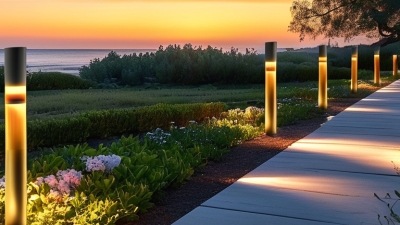
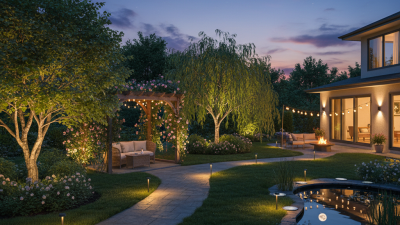
Choosing solar post lights in 2026 requires more than comparing prices and attractive product photos. A reliable choice should match your post size, climate, lighting purpose, and installation location. A warm light can make a garden path feel welcoming, while a brighter, cooler beam may improve visibility near steps or driveways. Small details matter.
In real outdoor use, panel exposure often determines performance more than advertised battery capacity. A post light placed beneath dense tree branches may look bright on the first evening, then fade before midnight. Check the panel angle, charging time, battery type, lumen output, and expected runtime. Also examine the IP rating, especially for areas with heavy rain, dust, or coastal air. The casing should feel solid, not thin or easily warped.
Smart features may add value in 2026, including motion sensors, adjustable brightness, and app controls. Yet extra technology can increase maintenance and failure points. I have learned that the simplest design is not always the cheapest, but it is often easier to repair or replace. That judgment is imperfect.
This guide will compare solar post lights by function, durability, appearance, and long-term value. It will also consider installation height, seasonal sunlight, battery replacement, and responsible material choices. Product claims should be checked against independent testing, clear warranty terms, and credible customer feedback. A beautiful fixture is useful only when it remains dependable after weeks of cloudy weather. The right selection should illuminate your outdoor space without creating unnecessary upkeep.
Classify Solar Post Lights by Use, Form, and 2026 Efficiency Benchmarks
How to Choose Solar Post Lights in 2026?
Classify solar post lights by use, form, and efficiency. For pathways, choose compact bollard-style fixtures with wide, low-glare beams. Driveway posts need stronger downward lighting and impact-resistant housings. Decorative lantern forms suit gardens, but their patterned covers often reduce useful brightness. IEA PVPS Trends 2024 reports 456 GW of new solar capacity worldwide in 2023. This growth supports better photovoltaic components, yet small outdoor lights still face limited winter charging.
In 2026, compare usable light, not only advertised lumens. A practical target is 80–120 lumens for pathway posts and 150–300 lumens for security-focused posts. Seek photovoltaic conversion near 20% or higher, lithium storage, and at least 8–10 hours of rated runtime. Test data should follow recognized methods such as IES LM-79 for electrical and photometric performance. Weather resistance matters too. IP65 is a sensible baseline for exposed locations. However, runtime claims can look optimistic under cloudy skies. I still question any figure tested only under perfect laboratory sunlight.
Tips: Check the panel at noon. Avoid shade from trees or roof edges. Choose warm light near seating areas, and neutral light near steps. Replace vague “all-night” claims with measured runtime data. The U.S. Department of Energy’s solid-state lighting reports show continuing gains in LED efficacy, but efficiency alone cannot fix a small battery or poorly angled panel. Choose by use first, form second, and verified 2026 performance last.
Set Light Output: 100–300 lm for Paths and 500+ lm for Security
How to Choose Solar Post Lights in 2026?
Light output should match the task, not just the product’s appearance. For pathways, choose 100–300 lumens per fixture. This range can reveal steps, borders, and uneven paving without creating harsh glare. Security areas need 500 lumens or more, especially near gates, garages, and dark corners. Lumens measure total light, while lux measures light reaching a surface. A 500-lumen lamp may still perform poorly if its beam is narrow or badly aimed. The Illuminating Engineering Society recommends evaluating distribution, glare, and visual comfort alongside brightness. U.S. Department of Energy solid-state lighting research also shows that efficient LEDs can deliver substantial light with lower energy use than older technologies.
I once selected lights by lumen rating alone. That was a mistake. A shaded panel, weak battery, and cloudy winter weather reduced the output dramatically. Check the battery capacity, solar-panel position, and advertised runtime. The International Energy Agency’s Energy Efficiency 2024 report emphasizes efficient lighting as an important energy-saving measure, but efficiency cannot replace good placement. For security lighting, motion detection can preserve stored energy. A steady 500-lumen output may not be necessary all night.
Tips: Place path lights about 2–3 meters apart, then test them after sunset. Avoid lining them perfectly, or the walkway may look like an airport runway. For security zones, aim the beam across the approach rather than directly into visitors’ eyes. Treat laboratory ratings cautiously. Real gardens are messier.
How to Choose Solar Post Lights in 2026?
Recommended light output: 100–300 lumens for paths and 500+ lumens for security-focused lighting.
Use lower-output lights for comfortable pathway guidance and higher-output lights where visibility and security are priorities. Actual performance also depends on fixture spacing, beam angle, mounting height, weather, and daily sunlight exposure.
Compare PV Panels and Batteries: 15–25% Efficiency, 2,000+ Cycles
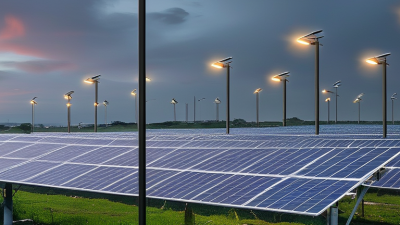
Choosing solar post lights in 2026 starts with understanding two numbers: PV efficiency and battery cycle life. A panel rated at 15–25% converts sunlight into usable electricity under laboratory conditions. Real output changes with shade, dust, temperature, and winter sun angles. A light under a tree may collect far less energy than its label suggests.
Battery quality matters just as much. Look for storage designed to deliver 2,000 or more charge cycles. That figure can indicate several years of regular use, but it is not a guarantee. Heat, deep discharge, and long periods at zero charge can shorten battery life. A larger battery is not always better. It must match the panel’s daily energy production.
Check the panel angle and clean it monthly. Small details matter. Choose a replaceable battery when possible, because the battery often ages before the housing. During testing, compare brightness after cloudy days, not only after strong summer sunlight. I once overvalued brightness during the first evening. That was a mistake. The light looked impressive, yet its runtime dropped sharply after two overcast days. A reliable choice balances panel efficiency, battery cycles, weather resistance, and realistic seasonal performance.
Verify Runtime, Controls, Certifications, and Warranty Terms Before Buying
How to Choose Solar Post Lights in 2026?
Runtime claims deserve careful testing. A light advertised for 12 hours may achieve that only after a sunny summer day, with reduced brightness. Check whether the specification separates “full output” from “low mode” runtime. The International Energy Agency’s Renewables 2024 report recorded about 510 GW of global solar PV additions in 2023, yet sunlight still varies sharply by season and location. Choose a panel sized for winter conditions, not only bright showroom performance. Test one unit outdoors for several cloudy evenings.
Controls also affect real use. Motion sensors can reduce battery drain near driveways, while dusk-to-dawn modes suit pathways. Confirm sensor range, delay time, and whether brightness changes automatically. The U.S. Department of Energy’s 2023 Solid-State Lighting R&D Opportunities report identifies LED efficacy above 200 lumens per watt in advanced products, but higher efficiency does not guarantee useful illumination. I once trusted lumen numbers without checking beam spread. The result looked bright, but the path remained uneven.
Review certification details, not just printed symbols. Look for applicable electrical, ingress-protection, and battery-safety standards, with test numbers or accessible documentation. An IP rating should match rain, dust, and irrigation exposure. Warranty terms need equal attention: battery coverage may be shorter than the housing warranty, and labor or shipping may be excluded. Keep receipts and installation photos. Small details matter.