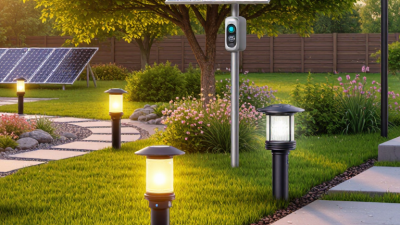
Solar post lights are moving from decorative garden accessories into practical, low-voltage outdoor lighting solutions. Their appeal is visible at dusk: a pathway glows, a fence line becomes easier to follow, and no trenching is required. This matters as renewable energy expands. IRENA’s Renewable Capacity Statistics 2024 reported 473 gigawatts of new renewable capacity worldwide in 2023, including approximately 346 gigawatts from solar power. That growth does not prove every solar product performs equally. It does show why buyers are examining solar-powered equipment more carefully.
This guide reviews the top 10 solar post lights for global buyers. The comparison focuses on measurable details, including panel efficiency, battery capacity, lumen output, weather resistance, operating time, installation fit, and warranty support. A light advertised for 12 hours may achieve less under winter skies, heavy shade, or dusty panels. Real conditions matter. The International Energy Agency’s Renewables 2024 report also emphasizes the continuing expansion of solar PV, while highlighting supply-chain, grid, and deployment challenges. Small products face similar realities, although at a different scale.
Buyers should not judge brightness from photographs alone. Check beam coverage, charging conditions, replacement parts, and ingress protection ratings. Look closely. Some models excel on stone columns but appear weak beside wide driveways. Others offer attractive pricing yet provide limited battery information. That is a gap worth questioning. This selection aims to combine manufacturer specifications, practical installation experience, and independent market evidence, helping distributors, contractors, homeowners, and retailers choose solar post lights with greater confidence. Performance varies by climate. Honest comparisons must acknowledge that.
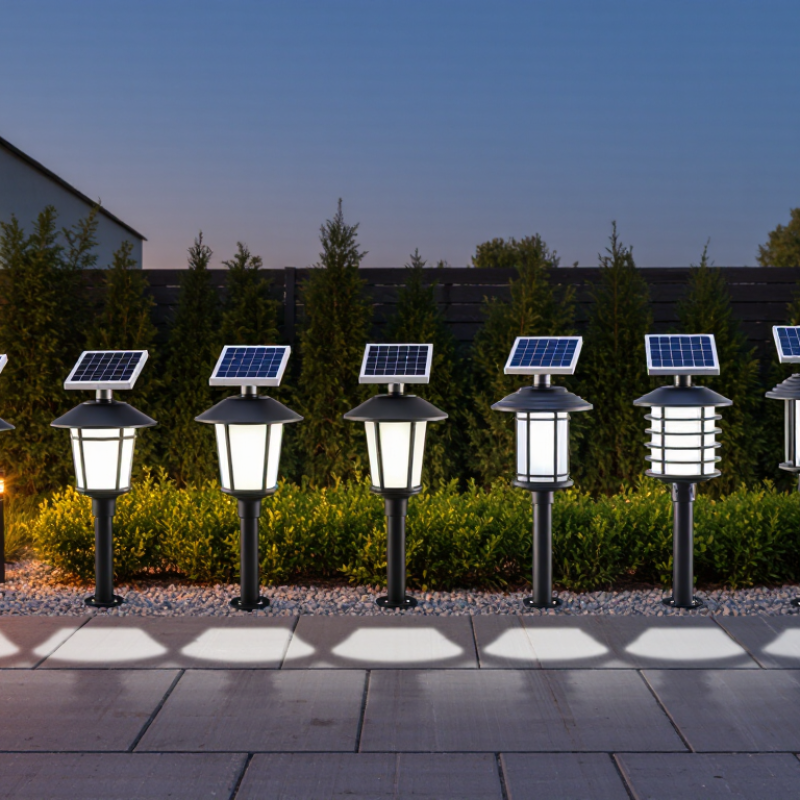
Solar post lights are standalone outdoor luminaires powered by sunlight. Their photovoltaic cells convert daylight into electrical energy. A charge controller regulates that energy inside the unit. The battery stores it for evening use. At dusk, a light sensor activates the LED module automatically. This simple system explains their appeal in gardens, driveways, and remote entrances. The International Renewable Energy Agency reported 1,419 GW of global solar capacity by the end of 2023. That figure reflects wider confidence in photovoltaic technology, but not every small lamp performs equally.
Performance depends on panel size, battery chemistry, temperature, shading, and daily sunlight. A shaded panel may produce little energy, even under a bright sky. In winter, shorter days reduce charging time. Outdoor buyers should check battery capacity, lumen output, operating hours, and ingress protection ratings. IEC 60529 defines IP testing for protection against dust and water. The International Energy Agency’s Photovoltaic Power Systems Programme also emphasizes that system performance varies with local climate and installation conditions. These details matter more than attractive packaging.
In practical testing, a light facing open southern or northern exposure usually charges better, depending on hemisphere. Keep the panel clear of leaves and nearby walls. Real-world performance is messier. Rated runtime often assumes ideal charging and a new battery. Battery aging can reduce brightness after several seasons. I would also question unusually high lumen claims without test conditions. A reliable comparison uses measured output, replacement-part availability, and documented safety compliance. That approach supports more informed global purchasing decisions.
For a Top 10 Solar Post Lights list, global buyers should compare performance, not appearance alone. Key checks include lumen output, battery capacity, charging time, autonomy, color temperature, and pole compatibility. Weather resistance also matters. An IP65 rating can protect against dust and water jets, while weaker enclosures may fail during monsoon seasons or coastal exposure.
IRENA’s Renewable Capacity Statistics 2024 recorded about 346 GW of new solar capacity worldwide in 2023. This rapid growth supports wider solar lighting adoption, but regional conditions still decide results. The World Bank’s Global Solar Atlas shows major differences in solar irradiation between locations. A light designed for southern Europe may underperform in northern winters. Field testing should measure evening brightness, motion-sensor response, and battery recovery after cloudy days. Lighting Global quality guidance also encourages testing durability, battery safety, and actual light output. Rated figures can be optimistic.
Tips: Compare usable lumens, not marketing lumens. Seek at least two nights of practical autonomy. Check operating temperatures, replacement battery access, mounting diameter, and warranty terms. A warm 3,000K light usually feels more comfortable near homes, while 4,000K can improve pathway visibility. I would not rank any model highly without reviewing its test conditions. Even then, the ranking remains imperfect.
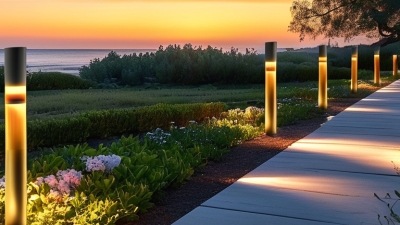
Solar post lights now serve gardens, entrances, walkways, and rural properties. Design should match the setting, not merely imitate traditional lanterns. Slim aluminum bodies suit modern patios, while frosted housings create softer light near seating areas. For heritage-style homes, warm white LEDs usually look less intrusive.
Performance depends on more than advertised brightness. Look for a replaceable battery, efficient photovoltaic cells, and a sealed housing rated for outdoor exposure. The U.S. Department of Energy states that LED lighting can use up to 75% less energy than incandescent lighting and last up to 25 times longer. Still, solar fixtures lose output after several cloudy days. I have found that winter placement matters more than many product labels suggest.
The U.S. Department of Energy states that LED lighting can use up to 75% less energy than incandescent lighting and last up to 25 times longer.
Use also changes the buying decision. A low-lumen post light may guide steps without disturbing neighbors or wildlife. Driveway lighting needs wider distribution and stronger weather resistance.
IRENA’s Renewable Capacity Statistics 2024 reports 345 gigawatts of solar capacity added globally in 2023, representing about 73% of new renewable capacity.
That growth supports better components, but it does not remove the need for careful installation. Keep panels clear of tree shade, leave spacing between fixtures, and test the light after sunset. The most attractive design can still disappoint when its panel faces north.
Top 10 Solar Post Lights for Global Buyers
Climate, Regional Standards, and Installation Requirements
Climate changes the shortlist before price does. In humid coastal areas, salt air can damage exposed fasteners and battery contacts. Choose corrosion-resistant hardware and sealed battery compartments. In cold regions, battery capacity may drop sharply overnight. Larger panels and replaceable batteries can help. In dusty locations, inspect the panel surface often. Small dirt layers can reduce charging more than expected.
Regional standards also affect a safe purchase. Check local rules for outdoor electrical products, mounting heights, and public pathways. Product markings may differ between countries. Confirm voltage information, charger specifications, and disposal guidance before importing. An IP rating, such as IP65, indicates water and dust protection, but it does not guarantee performance in every climate. Read the test conditions carefully.
Installation requires practical judgment. A post light needs firm ground, suitable spacing, and several hours of direct sunlight. Avoid placing it beneath trees, balconies, or strong security lamps. In windy areas, use a deeper foundation and stronger anchors. I have found that attractive lights often fail because installers underestimate shade. That mistake is easy to repeat. Check winter sun angles, not only summer conditions. Some buyers prefer brighter illumination, yet excessive brightness can create glare for drivers and nearby homes. Adjustable settings may offer better control. Weather tests, warranty terms, spare-part access, and clear installation instructions deserve equal attention. A ranking of the top ten should reflect local conditions, not just appearance or advertised runtime.
| Rank | Recommended Light Type | Best Climate or Location | Typical Light Output | Typical Solar and Battery Configuration | Expected Nightly Runtime | Minimum Outdoor Protection | Regional Standards and Compliance References | Key Installation Requirements |
|---|---|---|---|---|---|---|---|---|
| 1 | All-Season Pathway Post Light | Temperate regions with regular sun and moderate rainfall | 100–300 lumens; warm white, approximately 2,700–3,000 K | 1.5–4 W photovoltaic module; 2,000–4,000 mAh lithium battery | 8–12 hours after a full sunny-day charge | IP44 minimum; IP65 preferred for exposed installations | IEC 60529 for ingress protection; IEC/EN 60598-1 for applicable luminaire safety; local low-voltage outdoor-lighting rules | Install the panel toward the equator with minimal shade. Anchor the post on stable soil or a small concrete footing and keep the light away from competing nighttime illumination. |
| 2 | Coastal and Salt-Air Post Light | Coastal zones, marine environments, and humid seaside properties | 200–500 lumens; warm white or neutral white, 2,700–4,000 K | 3–6 W photovoltaic module; 3,000–6,000 mAh lithium battery | 8–12 hours, subject to marine cloud cover | IP65 minimum; IP66 is preferable for wind-driven rain | IEC 60529; IEC/EN 60598-1; corrosion-resistant material requirements should be verified against the buyer’s local construction specification | Use stainless-steel or corrosion-resistant fasteners, isolate dissimilar metals, seal cable entries, and select powder-coated or marine-grade aluminum housing where available. |
| 3 | Hot, Dry, and Desert Climate Light | High solar-radiation areas with dust, heat, and limited rainfall | 300–800 lumens; neutral white, approximately 3,000–4,000 K | 5–10 W photovoltaic module; 4,000–8,000 mAh lithium battery or LiFePO₄ battery | 10–14 hours when correctly sized and ventilated | IP65 minimum; dust protection is especially important | IEC 60529 dust and water testing; IEC 62619 may be relevant to industrial lithium battery safety; local battery and electrical rules also apply | Provide airflow around the battery compartment, avoid installation beside heat-reflective walls, clean dust from the panel regularly, and confirm the battery’s rated operating temperature. |
| 4 | Cold and Snow-Prone Post Light | Cold climates, frost zones, and areas with seasonal snow | 200–600 lumens; warm white or neutral white | 4–8 W photovoltaic module; 4,000–8,000 mAh low-temperature-rated battery | 6–12 hours; winter autonomy depends strongly on snow cover and cloudiness | IP65 minimum; impact-resistant diffuser recommended | IEC 60529; IEC 62133-2 or IEC 62619 may apply according to battery type and product category; local snow and electrical installation codes must be checked | Install above the typical snow line, use a steep panel angle to reduce snow accumulation, and select a battery with a documented charging-temperature range. |
| 5 | Monsoon and Heavy-Rain Post Light | Tropical regions with intense rainfall, high humidity, and intermittent sunshine | 300–700 lumens; neutral white, approximately 3,000–4,000 K | 5–10 W photovoltaic module; 5,000–10,000 mAh lithium or LiFePO₄ battery | 8–12 hours, with three-night reserve preferred | IP66 preferred; IP67 may be selected where temporary flooding is possible | IEC 60529; IEC/EN 60598-1; local wiring, earthing, and lightning-protection requirements should be reviewed | Use downward-facing cable glands, drainage paths, sealed connectors, and raised foundations. Do not place the battery compartment where standing water can collect. |
| 6 | Low-Sunlight and Cloudy-Climate Light | High-latitude, frequently overcast, or shaded suburban locations | 150–400 lumens; warm white to reduce energy consumption | 4–8 W high-efficiency photovoltaic module; 6,000–12,000 mAh battery | 8–10 hours with a two- to three-night energy reserve | IP65 minimum | IEC 60529; IEC/EN 60598-1; battery transport and safety documentation should include applicable UN 38.3 test evidence for lithium batteries | Prioritize an unshaded solar position, allow seasonal adjustment of panel tilt, and use a programmable dimming profile rather than operating at full output all night. |
| 7 | High-Wind Driveway and Garden Post Light | Open fields, exposed driveways, elevated sites, and storm-prone areas | 300–800 lumens; neutral white, approximately 3,000–4,000 K | 5–12 W photovoltaic module; 6,000–12,000 mAh battery | 8–12 hours, depending on the dimming schedule | IP65 or higher; housing should have a documented wind-load rating | IEC 60529; local structural, wind-load, foundation, and electrical codes; use region-specific building-code calculations where required | Use a reinforced pole, galvanized or stainless anchors, and a concrete footing sized for local soil and wind conditions. Do not rely only on shallow ground spikes in exposed locations. |
| 8 | Commercial Walkway and Hospitality Post Light | Hotels, campuses, apartment paths, parks, and public-access walkways | 600–1,500 lumens; neutral white, approximately 3,000–4,000 K | 10–25 W photovoltaic module; 10,000–25,000 mAh battery or LiFePO₄ battery | 10–14 hours with automatic dimming and reserve capacity | IP65 minimum; IK08 or higher impact protection is useful in public areas | IEC/EN 60598-1; EN 60598-2-3 may be relevant to road and public-area lighting; IEC 62471 may be considered for photobiological safety; local accessibility and lighting rules apply | Prepare a lighting layout to control glare and uniformity, provide tamper-resistant hardware, maintain clear pedestrian routes, and verify foundation and cable-routing requirements before installation. |
| 9 | Security-Oriented Solar Post Light with Motion Sensor | Residential entrances, storage areas, side yards, and low-traffic security zones | 500–1,200 lumens on activation; 50–200 lumens in standby mode | 6–15 W photovoltaic module; 8,000–20,000 mAh battery | All-night standby plus motion-triggered operation; actual trigger count affects runtime | IP65 minimum; IP66 preferred for exposed walls and gates | IEC 60529; IEC/EN 60598-1; local requirements for outdoor electrical equipment and wireless functions, if included | Set the sensor away from moving tree branches and hot exhaust outlets, adjust detection height and angle, and avoid directing high-output light toward roads or neighboring windows. |
| 10 | Heritage, Courtyard, and Decorative Post Light | Historic districts, courtyards, resorts, and landscaped properties | 80–300 lumens; warm white, approximately 2,200–3,000 K | 1–5 W photovoltaic module; 2,000–6,000 mAh battery | 8–12 hours at a low decorative output | IP44 for sheltered courtyards; IP65 for fully exposed locations | IEC 60529; IEC/EN 60598-1; heritage-area planning, visual-impact, and local building permissions may apply | Confirm that the design does not conflict with preservation rules, use a concealed but serviceable battery compartment, and position the panel where it receives adequate solar exposure without damaging protected structures. |
| Buyer note: The specifications above are typical selection ranges rather than guaranteed performance values. Actual runtime depends on latitude, season, shading, panel orientation, battery age, temperature, LED power, and the programmed dimming profile. IP ratings describe protection against dust and water ingress under IEC 60529 testing; they do not by themselves confirm resistance to corrosion, impact, flooding, or wind. | ||||||||
| Reference framework: IEC 60529 (IP code), IEC/EN 60598-1 (general luminaire safety), EN 60598-2-3 (road and street lighting where applicable), IEC 62471 (photobiological safety), IEC 62133-2 and IEC 62619 (battery safety according to battery category), and UN 38.3 (lithium battery transport testing). Always verify the current edition and the destination country’s mandatory requirements before purchase or installation. | ||||||||
For global buyers, ownership starts with the battery, not the brightness. Practical inspections often reveal dirty panels, loose seals, and aging cells. The U.S. Department of Energy reports that LEDs use at least 75% less energy and last up to 25 times longer than incandescent lighting. That advantage still depends on a replaceable, properly protected battery. Check whether the battery compartment is accessible. Small detail. Big consequence.
Clean the photovoltaic panel every few months, especially beneath trees or near dusty roads. NREL’s “Photovoltaic Degradation Rates” review found a median annual degradation rate of about 0.5% for photovoltaic systems. Solar post lights are smaller, less controlled products, so actual performance may vary. Do not treat this figure as a guarantee. Under IEC 60529, an IP65 enclosure is dust-tight and protected against water jets, but it is not designed for immersion. Avoid placing lights where sprinklers strike them directly.
Safety checks should include cracked lenses, exposed wiring, swollen batteries, and unstable posts. Replace damaged parts promptly. Rechargeable battery life often depends on temperature, charging cycles, and storage quality. I would not promise a fixed replacement interval. Long-term buyers should also confirm local battery recycling rules and keep installation records. These steps feel ordinary, yet they protect lighting performance, household safety, and ownership costs over several seasons.